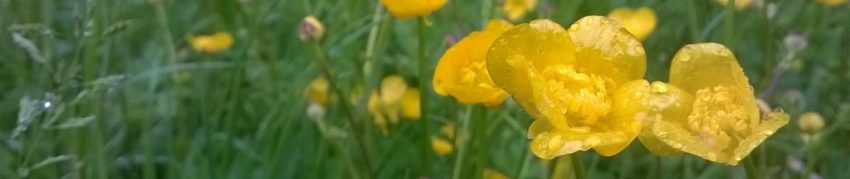
Hay Meadows are a type of grassland
Grasslands are an interest of mine
These upland hay meadows were a destination of choice for us on holiday this year! It’s chalk grassland where I live and I love it for the sheer diversity of flora. I recently completed a mini biodiversity online course from the Field Studies Council called Introducing Grassland Habitats. This made me think of the upland hay meadows we visited in North Yorkshire last summer.
What are upland hay meadows?
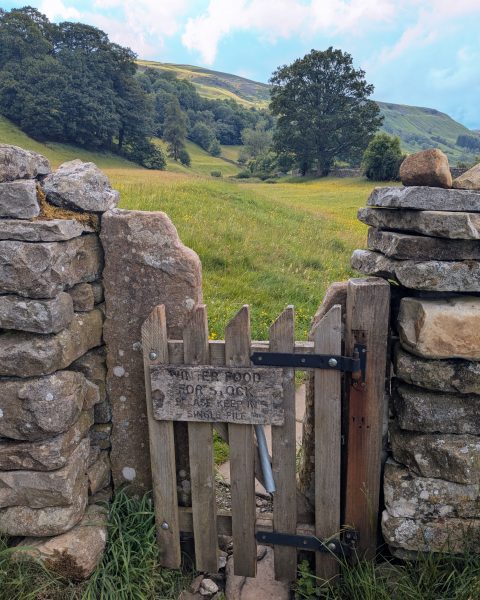
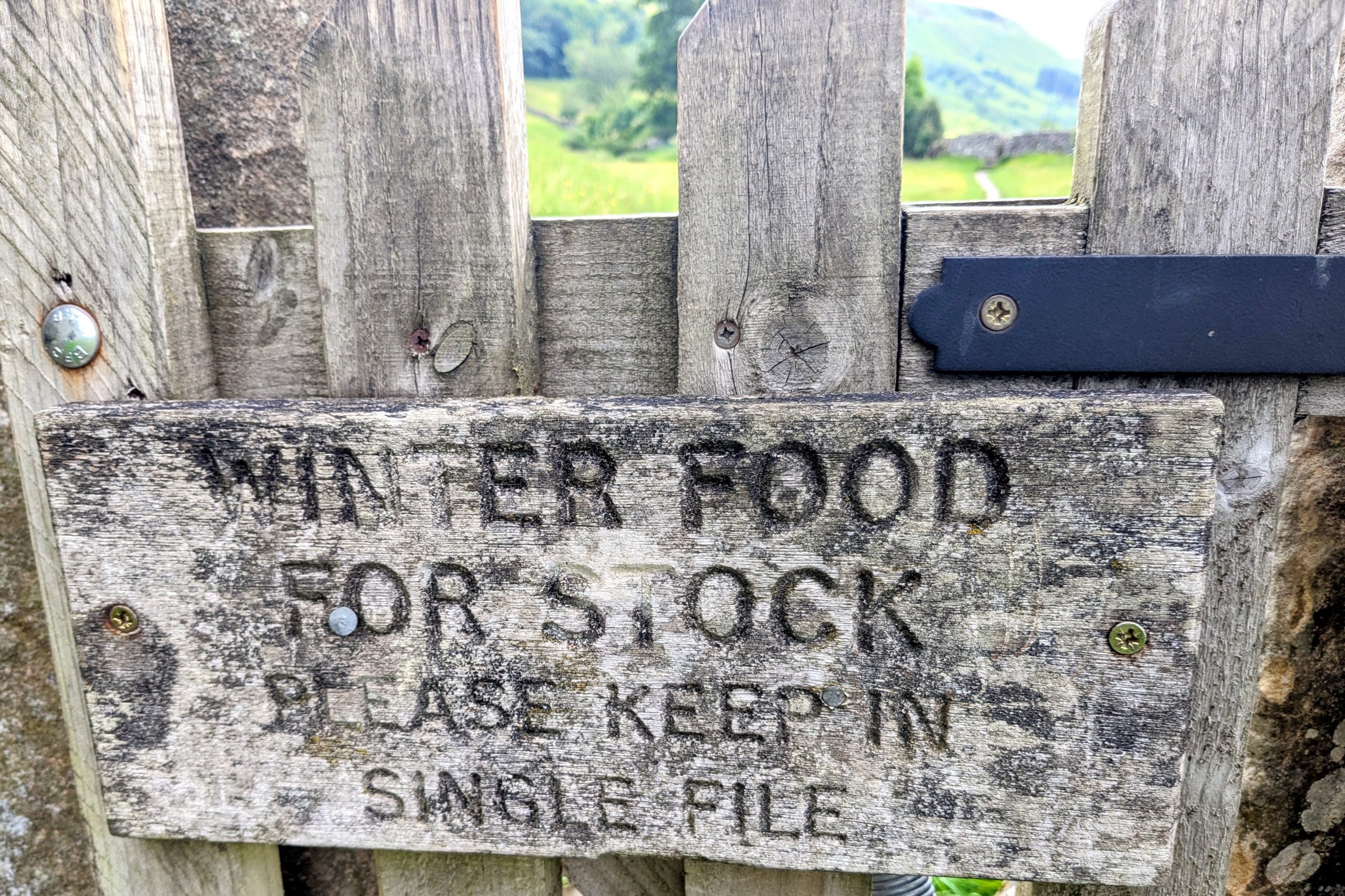
Upland hay meadows are found mainly in valley bottoms in the Yorkshire Dales and are the result of hundreds of years of management. Grass and intermingled wildflowers were traditionally grown for cutting to dry for winter animal fodder. This type of grassland is described as ‘unimproved’ because the grasses are naturally occurring rather than sown, and there has been no need for addition of artificial fertilizers. The use of fertilizers would tip the natural balance of plant diversity in favour of the grasses, which would then outcompete the wildflowers.
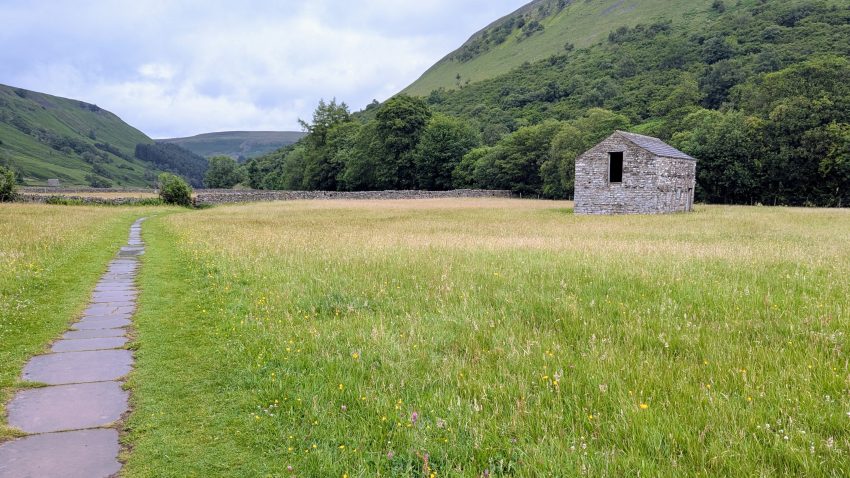
Many of the fields had their own cowhouse, as you can see in the top image, with an area to store the crop of hay. The cattle would be brought in to these to overwinter from nearby pasture. They would have been fed on the hay, and their muck used to fertilise the meadow. It’s thought that this method was used from the 17th Century for dairy cattle.
Our trip
We drove up to Hawes within the Yorkshire Dales National Park in Ethel the campervan, and found it was a great centre for local walks. The village of Muker is a 20 minute drive north from there along the scenic Buttertubs Pass. We were inspired to visit Muker in particular after reading the National Park website. We did a bit of homework and found a walk on the Yorksire Dales Milennium Trust website which had a downloadable walking guide. Four of the meadows in this area were named Coronation Meadows for their richness and were used as donors to supply seed for regeneration projects. The area is a Site of Special Scientific Interest (SSSI).
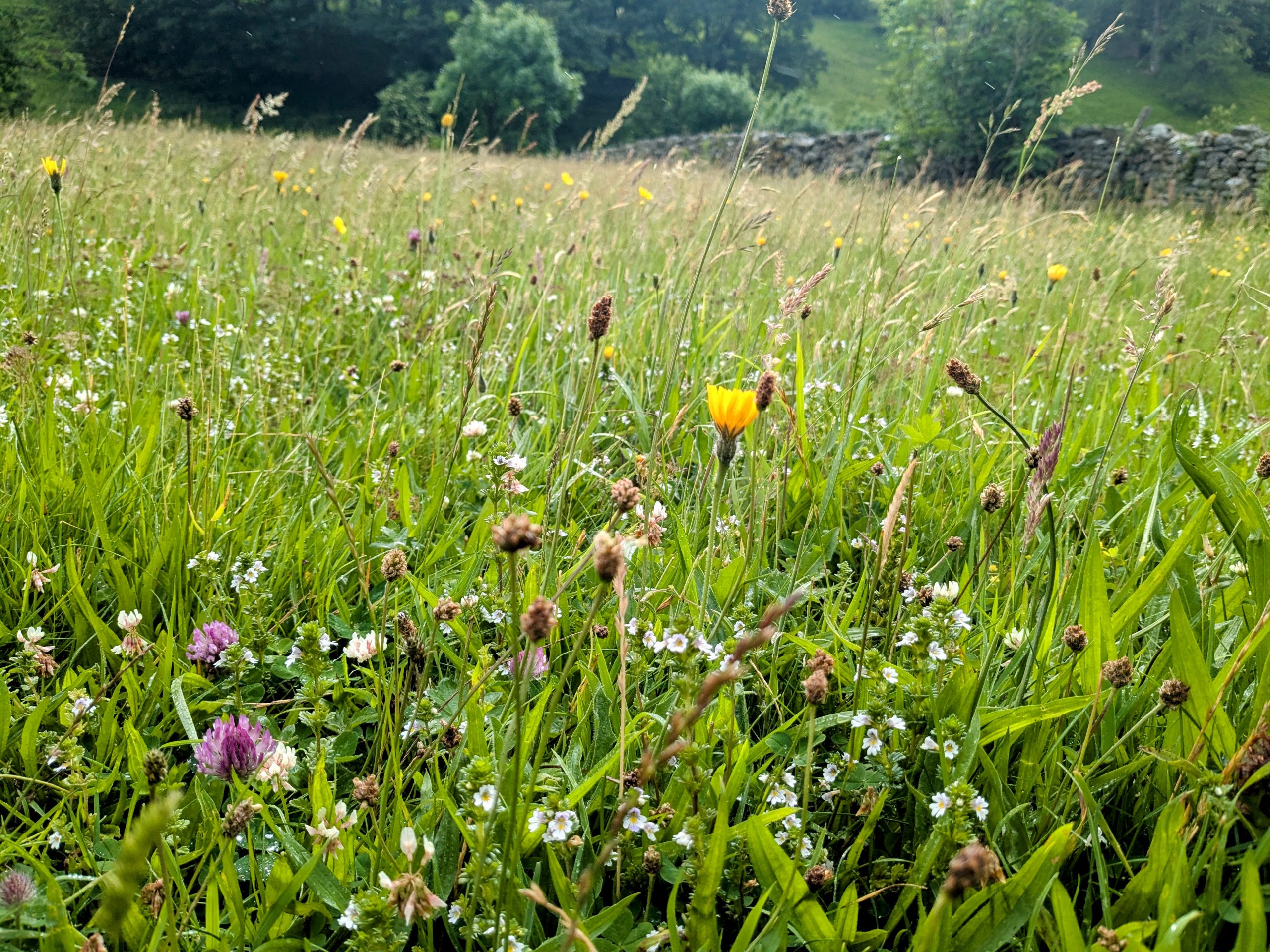
Typical species from a meadow like this include Wood Crane’s-bill Geranium sylvaticum, Yellow Rattle Rhinanthus minor, Pignut Conopodium majus, Lady’s Mantles Alchemilla species, Rough Hawkbit Leontodon hispidus and Sweet Vernal Grass Anthoxanthum odoratum.
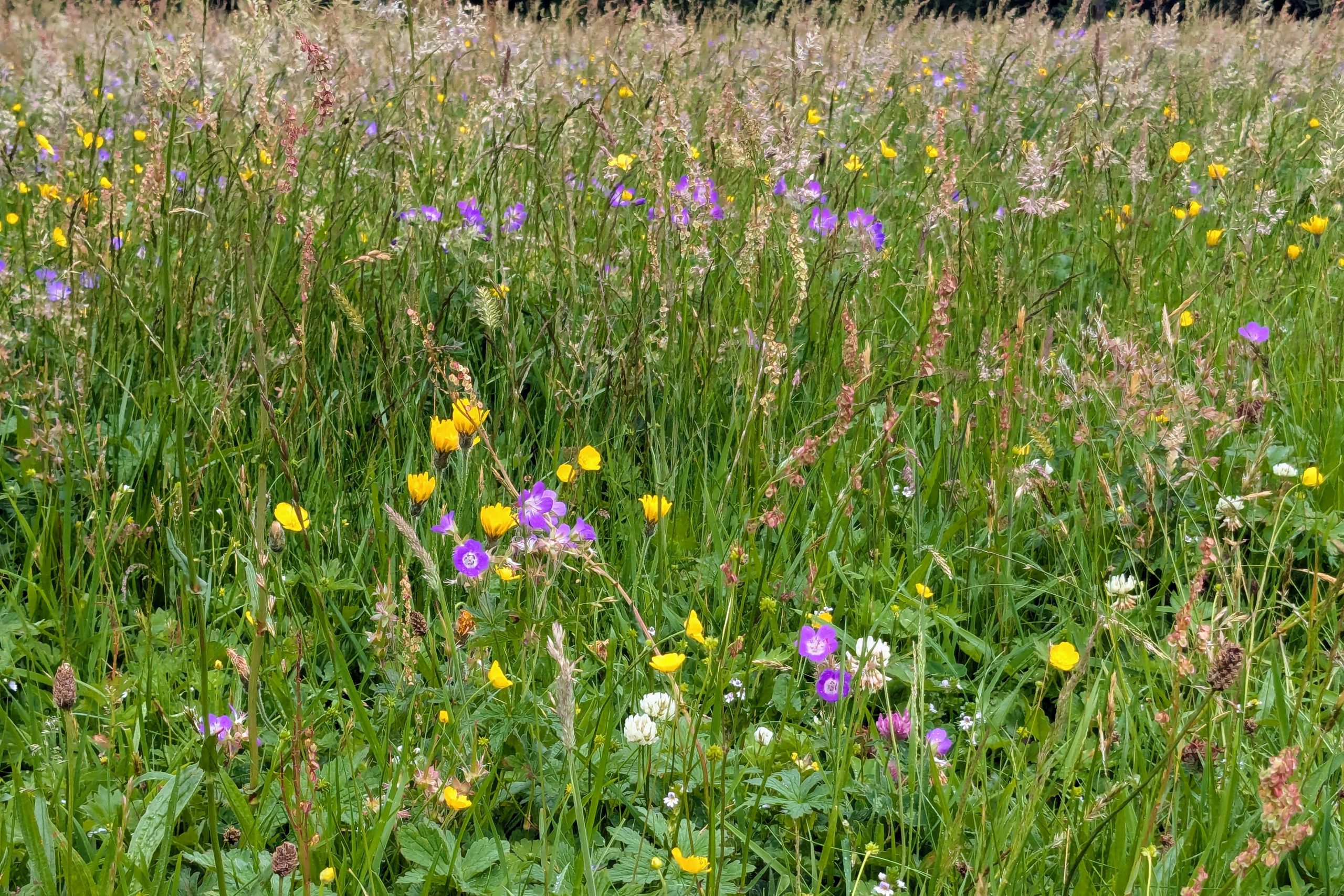
Wood Crane’s-bill Geranium sylvaticum
This was quite a tall Geranium and all the flowers I saw had a white eye inside the purple flower.
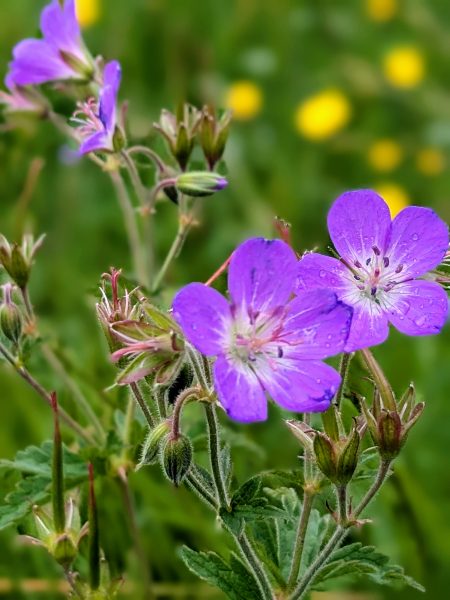
Yellow Rattle Rhinanthus minor
Yellow Rattle keeps the sward in check as it is hemi-parasitic on grasses.
Pignut Conopodium majus
The Pignuts I saw were going over and there were plenty of seed heads to be seen as well as the umbels of tiny white flowers.
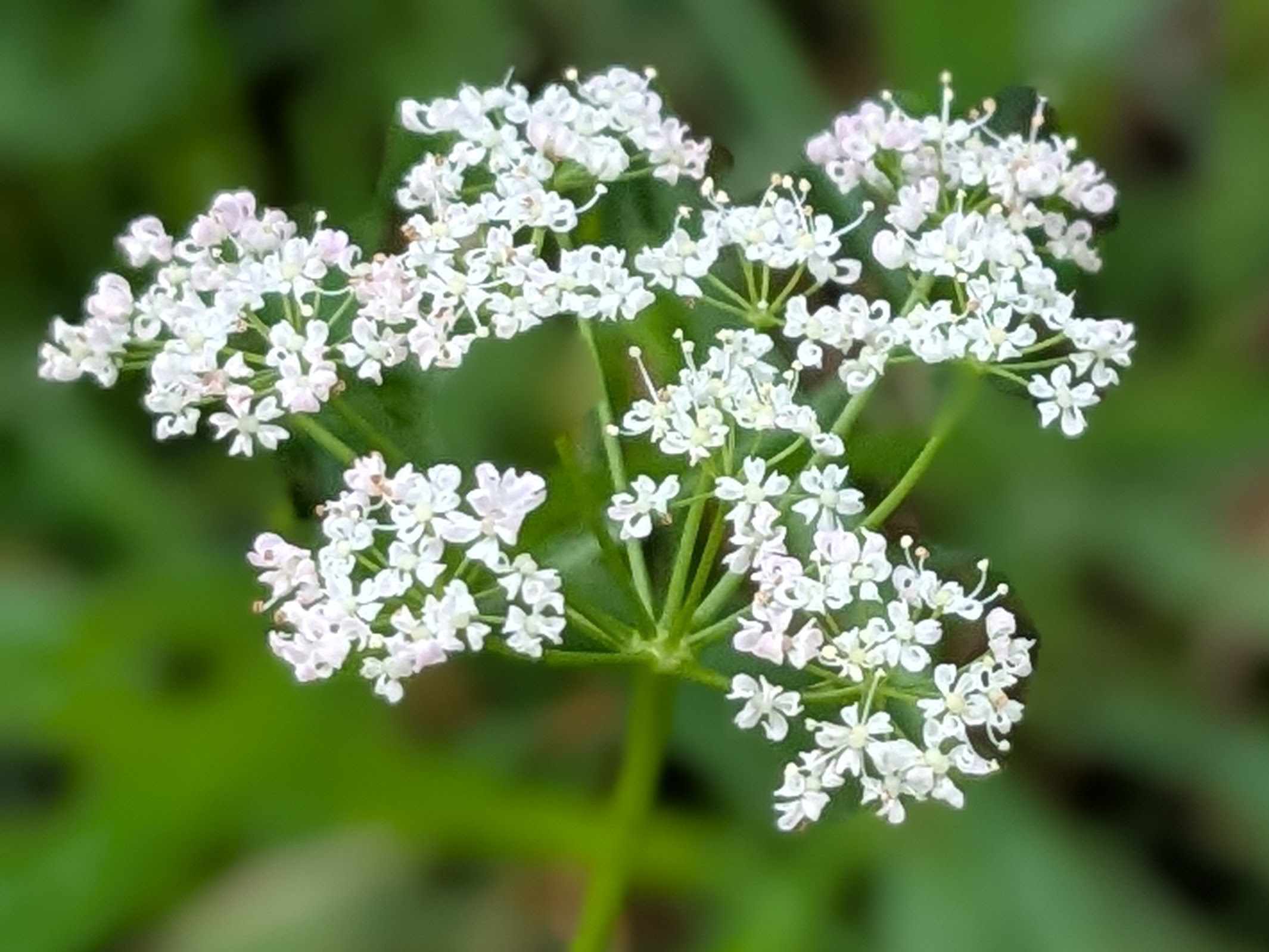
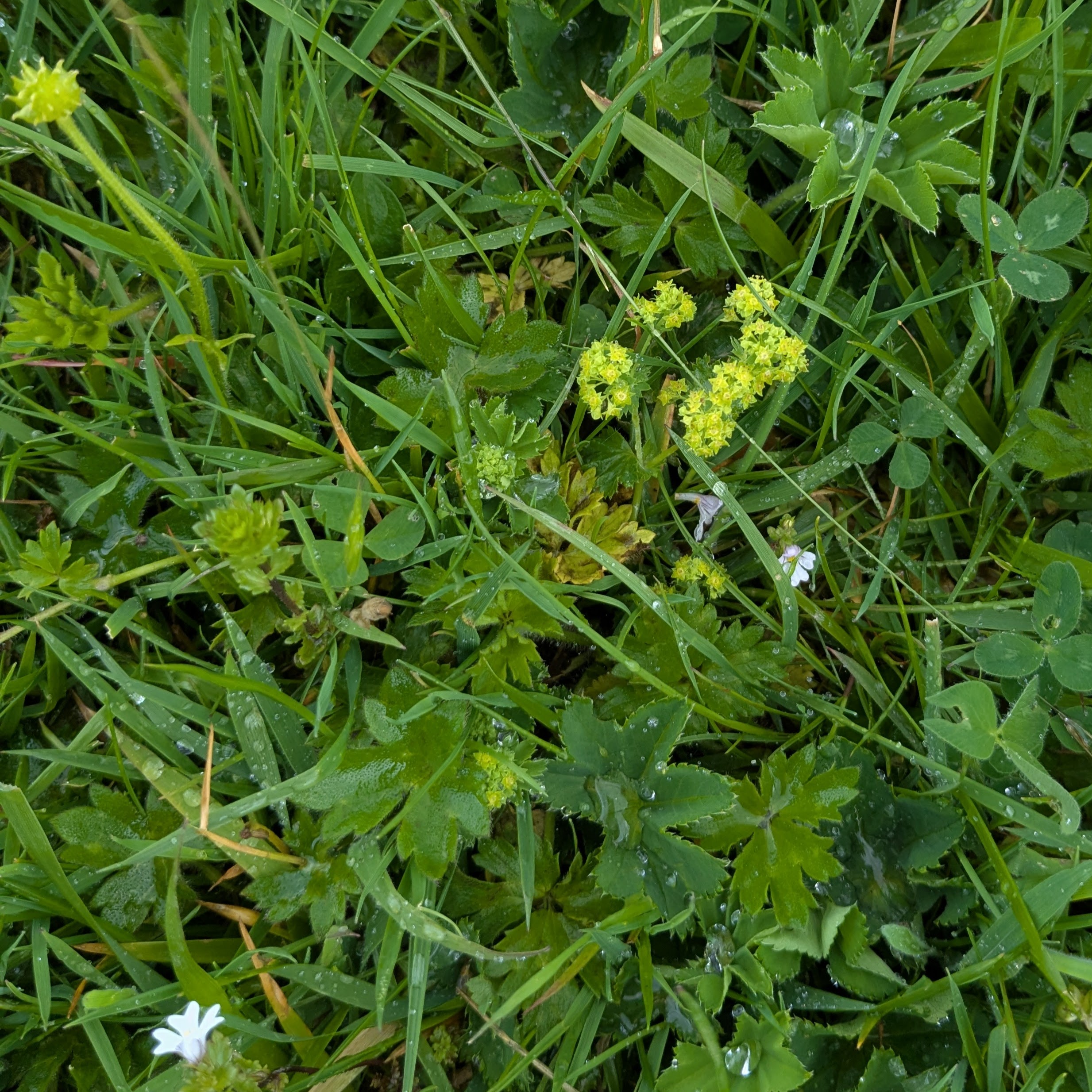
Lady’s Mantles Alchemilla species
We don’t see Alchemilla where I live (apart from garden escapes) as it’s an upland plant. So I was pleased to see plants in various spots on this trip , and near Buxton in Derbyshire previously, although the species are hard to separate.
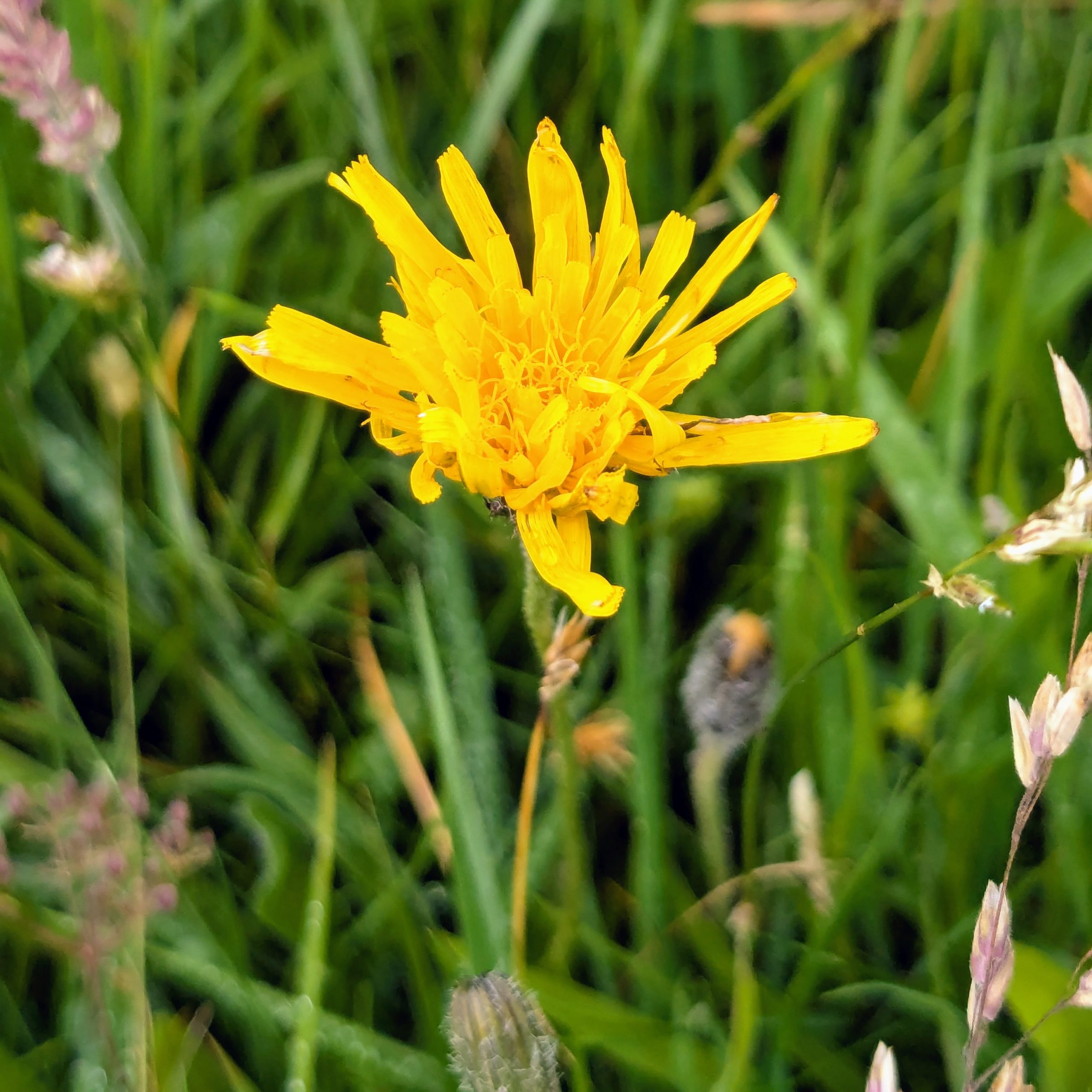
Rough Hawkbit Leontodon hispidus
I’m used to seeing this Hawkbit in Sussex as it’s one we look out for when doing a (lowland) chalk grassland survey locally. It is sunshine yellow with bristly forked hairs up the unbranched stems.
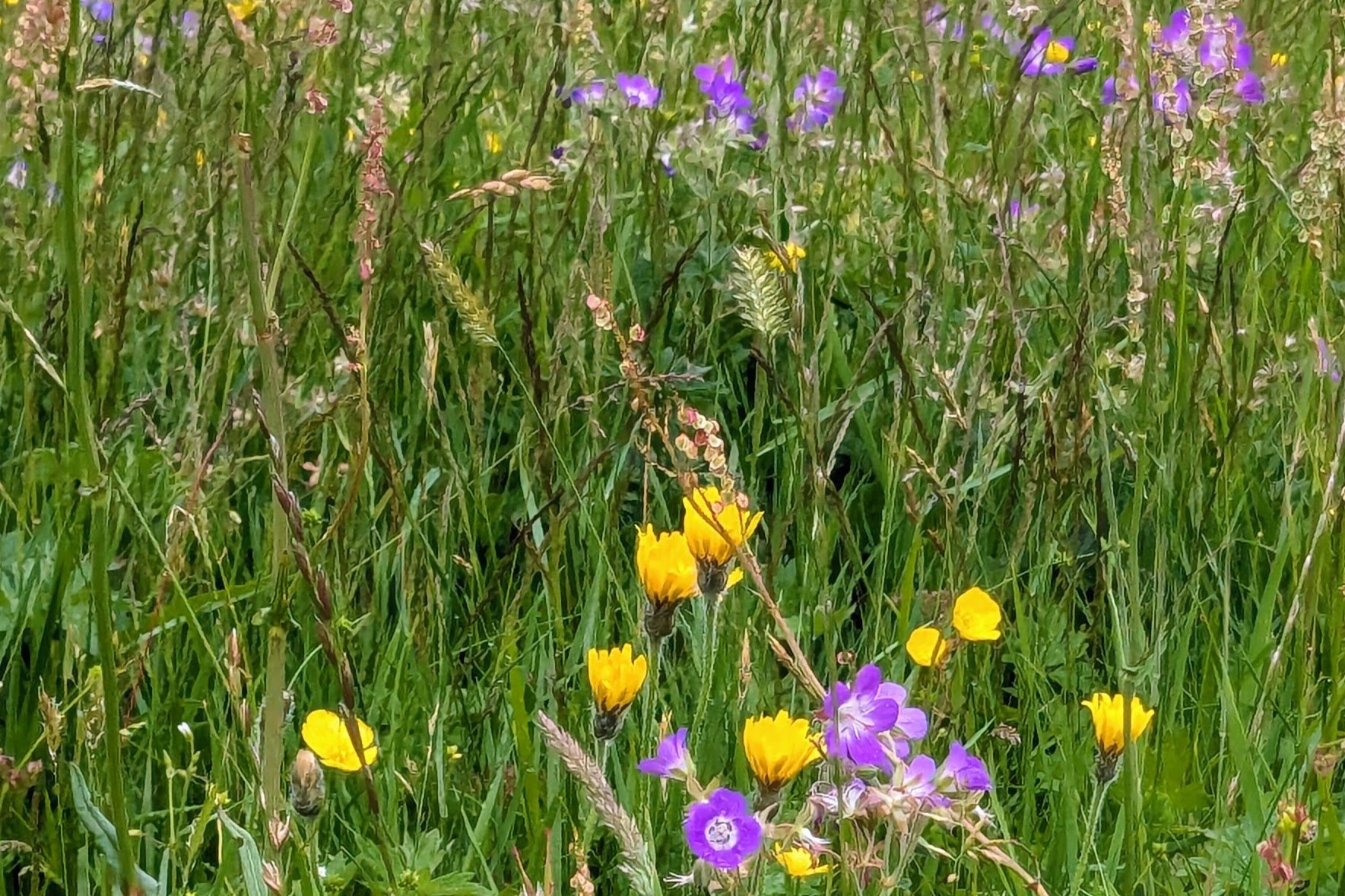
Sweet Vernal Grass Anthoxanthum odoratum
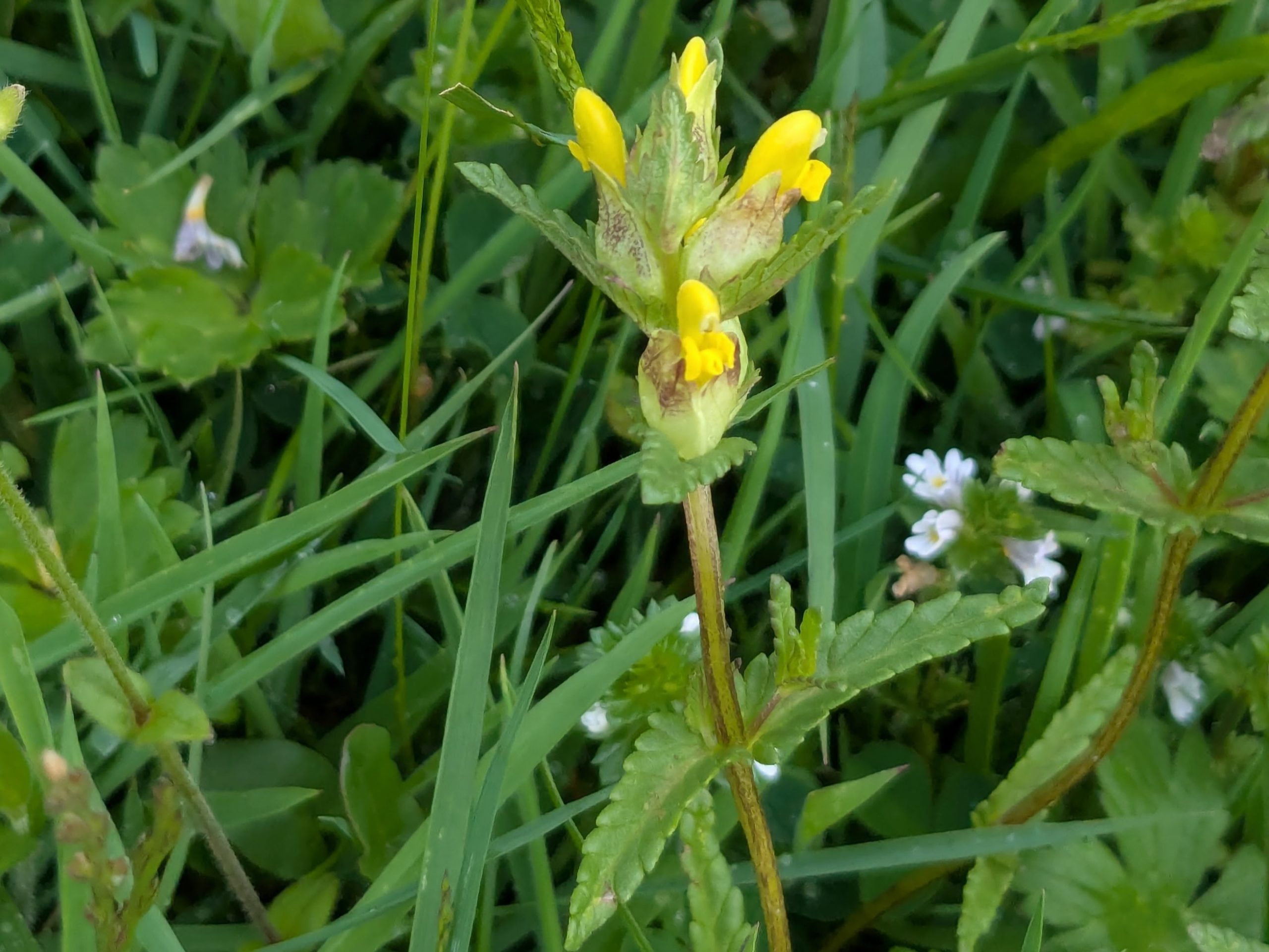
Grasses are generally still on my to-do list for identification, but this one can be seen right in the middle of the pic, either side of the sorrel.
Eyebright Euphrasia
Again I’m used to seeing hemi-parasitic Eyebrights in Sussex but they are famously hard to identify. The ones I saw in these hay meadows were much larger than any I’d seen on our exposed poor thin clifftop soil on the south coast. They were around 30cm tall with hairy stems, and possible species would include the rare Montane Eyebright Euphrasia officinalis subsp. monticola.
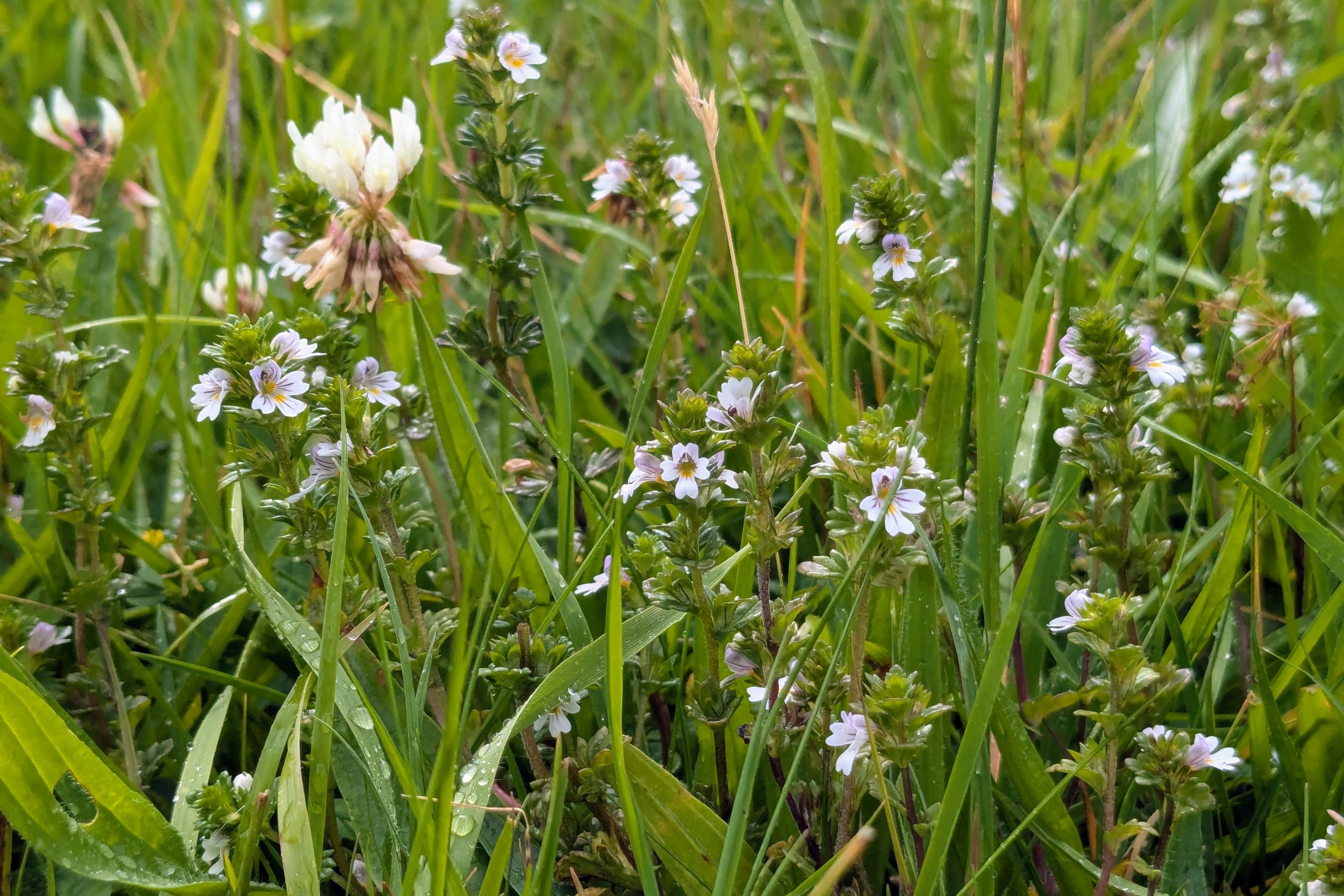
Other species identified in these hay meadows
- Red Clover Trifolium pratense
- White Clover Trifolium repens
- Sorrel Rumex
- Plantains Plantago
- Bulbous Buttercup Ranunculus bulbosus
This part of the country was a treasure trove of new finds for me and you can see some of them in my last two posts:
My newly identified wildflowers of 2025
My wildflower highlights of 2025